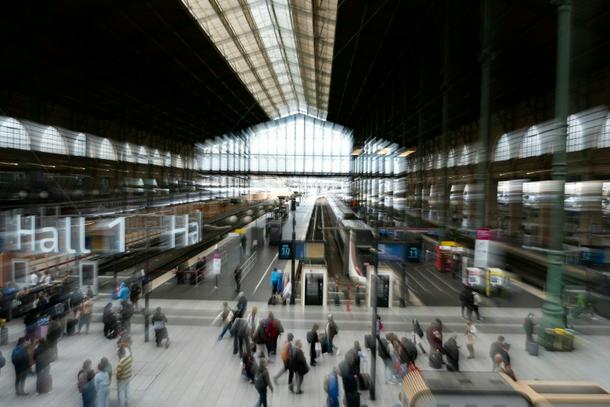
Dreams of seamless cross-country train journeys often rub up against a fragmented European rail network
Brussels (Belgium) (AFP) - The EU plans to force railway companies to sell rivals’ tickets on their websites and share data with booking platforms, under new rules unveiled Wednesday aiming to boost train travel.
Brussels said the move, fiercely opposed by operators, would make journeys more seamless, helping passengers to find, compare and buy tickets in one go.
“From Berlin to Barcelona by train. Today cross-country journeys mean several bookings and risks if you miss a connection. Let’s change that,” EU chief Ursula von der Leyen wrote on social media.
The European Commission wants to improve rail connection across Europe to cut carbon emissions from air transport.
But the goal has long rubbed up against a fragmented network broken into national systems that critics say create hurdles and push up costs.
Passengers often have to buy tickets from different operators to patch together a multi-country trip.
Almost 400 million people travelled internationally by air within the bloc in 2024, compared to about 150 million who took cross-border train trips, according to EU data.
To change that the commission proposed obliging rail operators to make their tickets available to all online platforms that want to sell them.
Undertakings that hold at least 50 percent of a national market would also have to display on their websites all services run in their country by competitors – and sell the related tickets if rivals ask them to.
The Community of European Railways (CER) lobby group slammed the idea, which would impact dominant national firms like France’s SNCF, Italy’s Trenitalia and Germany’s Deutsche Bahn, as “unprecedented and unjustified regulatory interventionism”.
“I’m not aware of any case where somebody is obliged to sell the product of a competitor. Think about Lufthansa obliged to sell Ryanair” flights, CER head Alberto Mazzola told AFP.
Opposition from operators – often publicly run national champions – could hamper the plan’s chances to become law as it is, as it needs approval from EU member states.
Mazzola also argued that firms that invested in their ticketing platforms would have to open them to “free-riders”, and the requirement to hand over data would benefit US-operated booking giants, tilting negotiating power in their favour and driving up ticket prices.
He added that cross-border rail travel accounted for only about seven percent of train trips in Europe because high-speed infrastructure was not always there, and not because of ticketing issues.
- ‘Leap forward’ -
The proposal has more support in the European Parliament, which also needs to back it – and prolonged negotiations on a compromise text between lawmakers and EU nations are likely.
“With more competition on the railways, passengers will benefit from better service and lower prices,” said Jan-Christoph Oetjen, a centrist European lawmaker.
EU transport chief Apostolos Tzitzikostas said the bloc expects the reform to result in a five-percent increase in passengers willing to take the train.
The plan will also affect non-EU countries that have rail deals with Brussels like Norway and Switzerland, he told a press conference in Brussels, adding he was hoping to see it become reality within two years.
Catriona Meehan of German booking platform Omio hailed a “welcome step” towards easier rail travel.
“Too often, fragmented data and ticketing still make it harder than it should be to search, compare and book journeys, even where good services exist,” she said.
The commission also proposed to update passengers’ rights to regulate cases where they miss a connection having bought a single ticket.
Under the new rules the company responsible for the delay will have to re-route or reimburse travellers and provide assistance, including overnight accommodation and meals where necessary.
Passengers left behind due to a disruption should also be allowed to hop on the next train.
The move comes as the Iran war has sent jet fuel prices soaring and raised the spectre of shortages during Europe’s peak travel season.
Advocacy group Transport & Environment welcomed the reform as a “huge leap forward for rail passengers and climate friendly transport” but contended it did not go far enough.
To get more people on trains “major rail operators should be required to sell tickets across all available rail routes that passengers frequently fly or drive”, not just the legs running through their country, it said.
Rail accounted for just 0.3 percent of EU planet-warming emissions from transport in 2022, compared to almost 12 percent for civil aviation, according to EU data.