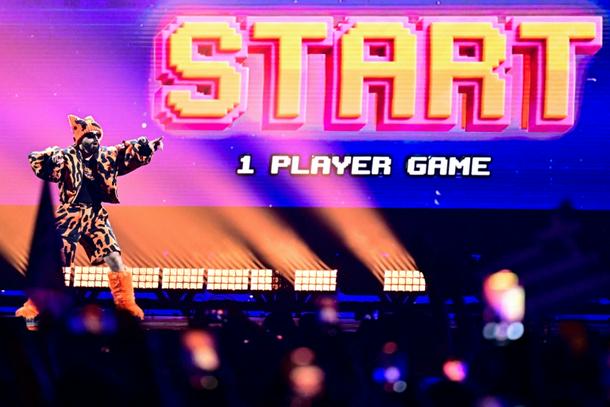
Greek artist Akylas has been gaining traction with Eurovision fans
Vienna (AFP) - Favourites Finland made it through the first Eurovision semi-final on Tuesday alongside Israel, whose participation saw five countries boycott the world’s biggest live televised music event.
With blasts of dry ice and jets of flame, the Eurovision party got started inside the Wiener Stadthalle in Vienna, where 11,200 revved-up fans saw 15 acts battle for 10 places in Saturday’s grand final.
Belgium upset the odds to make it through, with Croatia, Greece, Lithuania, Moldova, Poland, Serbia and Sweden also progressing.
However, it was the end of the road for Estonia, Georgia, Montenegro and Portugal’s dreams of Eurovision glory.
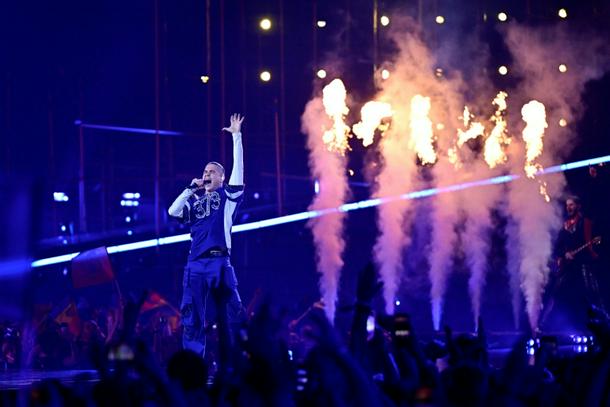
Satoshi opened the first Eurovision semi-final with the high-energy song 'Viva, Moldova!'
Tiny San Marino also bowed out, despite featuring guest vocals from 1980s Culture Club star Boy George.
Viewers across Europe and beyond were treated to styles ranging from upbeat Estonian guitar pop to soaring Polish high notes and the brooding mystery of Lithuania’s silver-painted Lion Ceccah.
Moldova opened the show with rapper Satoshi pumping up the energy.
Greece has been gaining traction with “Ferto”, featuring singer Akylas in tigerprint coat, shorts and hat against a retro video game backdrop in a performance that also showcased knitting, a glitterball and a classical statue that came to life.
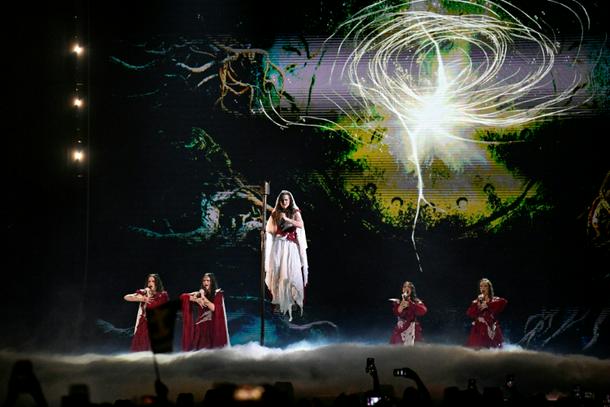
Croatian girl-group Lelek performed 'Andromeda' at the Wiener Stadthalle
“I was so happy, I got so emotional, the crowd was there singing ‘Ferto’ with me, it was amazing,” he said afterwards.
Croatia’s ethno-pop group Lelek delved into mythical fantasy visuals on “Andromeda”, opening with the lines “When you light a candle, ask your grandmother / Why she gave birth to daughters in fear”.
Serbian progressive metal band Lavina closed the concert with a throat-shredding growl.
- Biggest-ever boycott -
This year marks the 70th edition of Eurovision, which despite the razzmatazz rarely escapes the politics in the background.
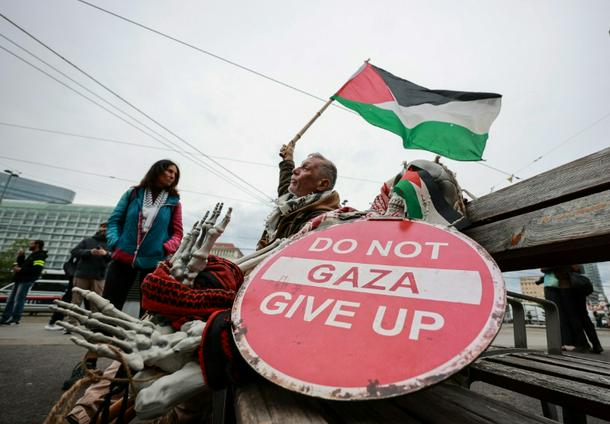
Israel's presence has led to several countries boycotting Eurovision
Israel’s war in the Gaza Strip prompted Spain, Ireland, Slovenia, the Netherlands and Iceland to withdraw from the glitzy annual extravaganza – the biggest-ever political boycott.
With fans waving Israeli flags, Noam Bettan performed “Michelle”, a song in Hebrew, French and English.
“I was free, I was me, I was authentic, I felt like my voice is in a good place… and I enjoyed every moment,” he said.
“There were moments when I felt that I’m just singing to my people back home.”
Earlier, a few dozen pro-Palestinian activists placed coffins in central Vienna in protest.
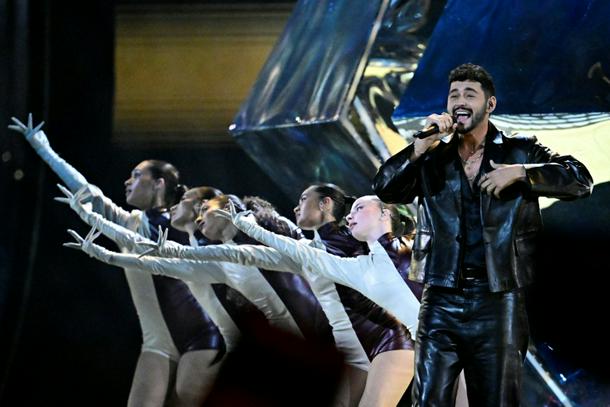
Noam Bettan sang 'Michelle' for Israel, a song in Hebrew, French and English
“Israel has become an aggressor,” demonstrator Karin Spindlberger, 67, told AFP.
“Music should be universal, and it is. Music should bring people together – but not in this way.”
Eurovision director Martin Green told a press conference the protests showed that Vienna allowed everyone to express themselves.
“It is a profoundly good sign of a democracy where you can have this show happening on one side of the city and a protest happening on the other side and they can both co-exist. Maybe the world can learn from that,” he said.
- Finnish flamethrowers -
Thanks to operatic singer JJ’s victory last year with “Wasted Love”, Austria is hosting for the third time, having staged the 1967 and 2015 contests.
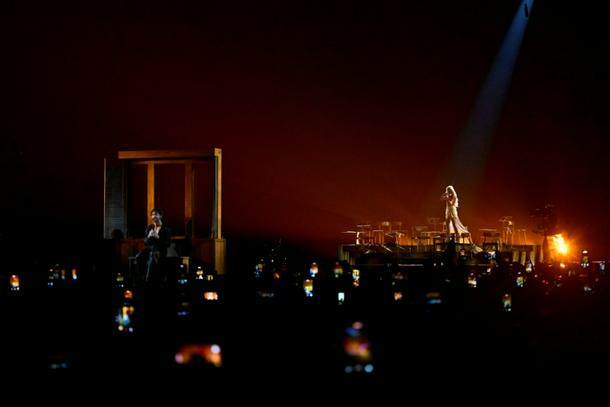
Linda Lampenius and Pete Parkkonen represented Finland with the song 'Liekinheitin'
This year, the semi-finals are being decided both by public vote and, for the first time since Turin 2022, by professional juries, in a bid to restore fans’ faith in the voting system.
Finnish duo Linda Lampenius and Pete Parkkonen are the overall Eurovision favourites with “Liekinheitin”, or “Flamethrower”.
“This is like the Olympics of the music world, and it’s nothing you take for granted that we would be in the final,” said violinist Lampenius.
“There’s something between us that somehow when I had been listening to Pete’s way of singing and playing and everything, I just knew that we think alike and we feel alike.”
At Eurovision, normally only the lead vocal is live, with the music on a backing track.
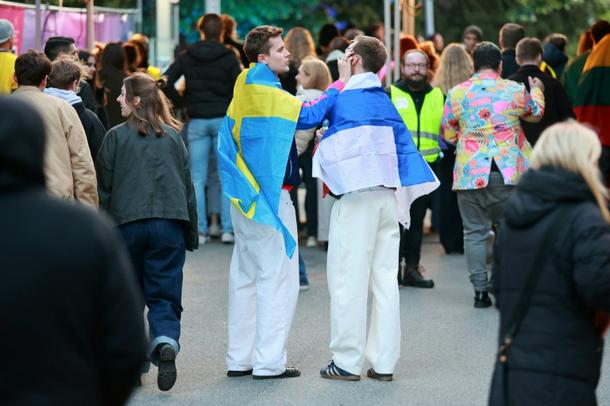
Eurovision fans draped in Swedish and Finnish flags arrive at the Wiener Stadthalle
However, Lampenius was given special dispensation to play her instrument live – a rare event since orchestras were phased out after Birmingham 1998.
Fifteen more acts will compete in Thursday’s second semi, with 10 going through.
Alongside Eurovision’s major financial backers Britain, France, Germany and Italy, hosts Austria have a guaranteed spot in Saturday’s 25-country showpiece final.