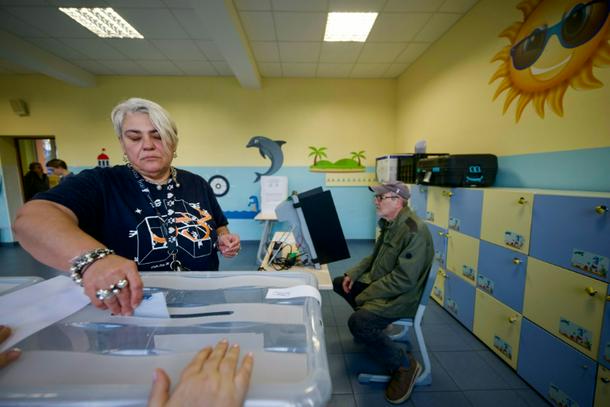
Bulgaria has been mired in a drawn-out political crisis since 2021
Sofia (Bulgaria) (AFP) - Bulgarians voted in the country’s eighth election in five years on Sunday, with ex-president Rumen Radev’s grouping tipped to win on a pledge to fight corruption, after an anti-graft movement triggered a long political crisis.
The European Union’s poorest member has been through a spate of governments since 2021, when large anti-graft rallies brought an end to the conservative government of long-time leader Boyko Borissov.
Radev, who has advocated for renewing ties with Russia and opposes military aid to Ukraine, was president for nine years in the Balkan nation of 6.5 million people.
He stepped down in January to lead newly formed centre-left grouping Progressive Bulgaria, with opinion polls before Sunday’s vote suggesting the bloc could gain 35 percent of the vote.
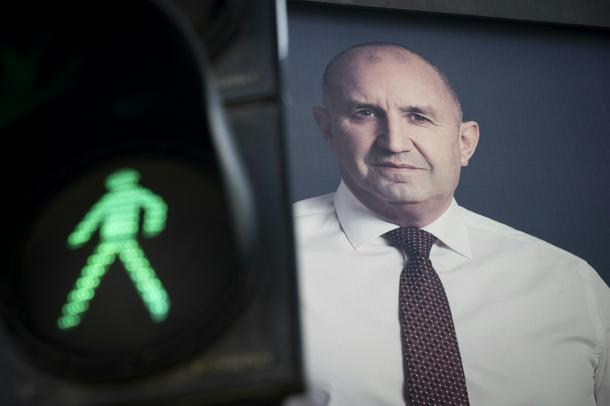
Ex-president Rumen Radev's Progressive Bulgaria is expected to top the snap vote
The former air force general has said he wants to rid the country of its “oligarchic governance model”, and backed anti-corruption protests in late 2025 that brought down the latest conservative-backed government.
“I’m voting for change,” Decho Kostadinov, 57, told AFP after casting his ballot at a polling station in the capital, Sofia, adding corrupt politicians “should leave – they should take whatever they’ve stolen and get out of Bulgaria”.
Several voters lined up at the station even before polling booths opened at 7:00 am (0400 GMT).
They will close at 1700 GMT, with exit polls expected immediately afterwards. Final results are expected on Monday at the earliest.
- ‘Preserve what we have’ -
Borissov’s pro-European GERB party is likely to come second, according to opinion polls, with around 20 percent, ahead of the liberal PP-DB.
“I’m voting to preserve what we have. We are a democratic country, we live well,” said Elena, an accountant of about 60, who did not give her full name, after casting her vote in Sofia.
Front-runner Radev has slammed the EU’s green energy policy, which he considers naive “in a world without rules”.
He also opposes any Bulgarian efforts to send arms to help Ukraine fight back Russia’s 2022 invasion, though he has said he would not use his country’s veto to block Brussels’ decisions.
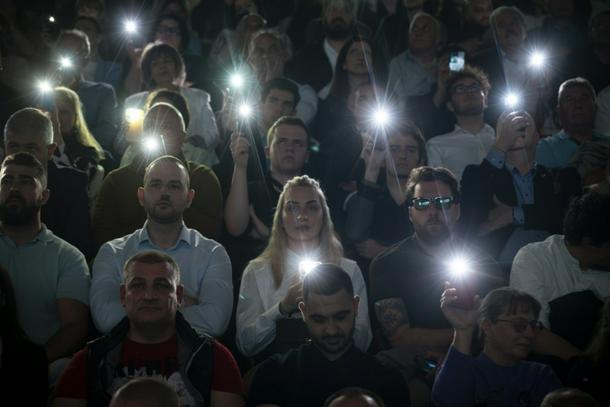
Turnout is expected to be higher than in the last vote
Pushing for renewed ties with Russia, Radev denounced a 10-year defence agreement between Bulgaria and Ukraine signed last month – drawing fresh accusations from opponents of being too soft on Moscow.
The ex-president also stoked outrage online for screening images at his final campaign rally of his meetings with world leaders including Russia’s Vladimir Putin.
“We need to close ranks,” he told around 10,000 cheering supporters at the rally, presenting his party as a non-corrupt “alternative to the perverse cartel of old-style parties”.
Borissov, who headed the country virtually uninterrupted for close to a decade, has dismissed suggestions that Radev brings something “new”.
At a rally of his party earlier this week, he insisted GERB had “fulfilled the dreams of the 1990s” with such achievements as the country joining the eurozone this year.
- ‘No one to vote for’ -
Radev is aiming for an absolute majority in the 240-seat parliament.
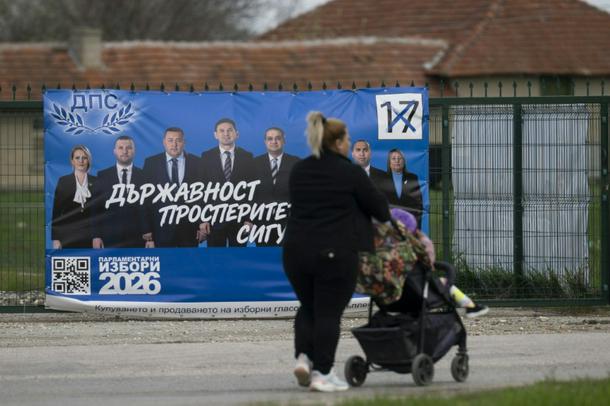
Boyko Borissov's pro-European conservatives are likely to come second, according to opinion polls
A lack of trust in politics has affected voter turnout, which slumped to 39 percent in the last election in 2024.
But with Radev rallying voters, high turnout is expected this time, according to analyst Boryana Dimitrova from the Alpha Research polling institute.
Miglena Boyadjieva, a taxi driver of about 55, said she always votes, but the “problem is that there is no one to vote for”.
“You vote for one person and get others. The system has to change,” she told AFP.
Political parties have called on Bulgarians to show up for the polls, also to curb the impact of vote buying.
In recent weeks, police have seized more than one million euros in raids against vote buying in stepped-up operations.
They have also detained hundreds of people, including local councillors and mayors.